Include the Students

Teachers arduously plan lessons, collaborate with colleagues, and jump through many pedagogical hoops to have their students to achieve the core standards. Yet, if the students display apathy toward the concepts taught, then the lessons occur within a classroom vacuum. That is when educators must INCLUDE the students as key protagonists. The following pledges ask learners to acknowledge that they are an integral part of their own futures. Younger learners or students with lower vocabulary or reading levels can recite the primary pledge. Students can also view candid digital photos taken during classroom learning and then be asked to rate their attentive behavior. To increase metacognitive levels, ask your students to chorally repeat these pledges or even create their own. Hence, self-regulated learners are born and nurtured!


Student Pledge (to be recited with enthusiasm!)


I know it’s the morning (afternoon)

And we’re still yawning (leaving soon)

But this is my promise for today (now)

When I will say (vow)

That I will do my best

And it’s not said in jest

To really care

And be sincere

To listen and learn

And respect each in turn

We all have many a need

But we all can succeed

If we use our mind

And to each other be kind

So here I am in school

Where not only teachers rule

But it’s each student

That needs to be prudent

If I have a positive attitude

I could master math, reading, and even latitude

The implications are great

I decide my own fate

So I’ll give it my best try

And that’s no lie

It’s my promise, no fingers crossed

I’ll ask questions when I’m lost

I’ll care about this stuff

Even when the going gets tough

And I think I’ll even smile

May as well, I’ll be here awhile


Primary Student Pledge


I can

Plan

And say

Each day

Will be fine

I won’t whine

I will always try

And that’s no lie

There are a lot of facts I need

That will feed

My budding brain

And I won’t complain

Because being smart

Is an art

So I promise to grow

To be a kid who’ll know!


Source: Karten, T. (2007) More Inclusion strategies that work! Aligning student strengths with standards. Thousand Oaks, CA: Corwin Press



Posted in Classroom Ideas | Tagged | Comments Off on Include the Students

Inclusion Works: Core Standards for ALL


Inclusion is more than a physical placement. It involves preparing students to be productive members of society. The common core standards are intended to include all students. This requires that the necessary and individualized supports, related services, and multiple learning opportunities are available to students with diverse abilities. Collaboratively, staff, families, and students figure out how increased learning outcomes across the disciplines are achieved.


Post secondary choices are widened when students’ academic skills are sharpened through the skilled eyes of educators within supportive school districts. This requires ongoing learning opportunities for staff members as well. Neither students, nor teachers should be frustrated. Sharing inclusion strategies and interventions is a way for everyone to highlight abilities that correlate with the standards. Professional development that honors educators’ needs then translates to inclusion classroom successes. Thankfully, high expectations for students with disABILITIES is highly expected!


Posted in Professional Development | Tagged | Comments Off on

Positive Inclusion Attitudes Prevail

He will never succeed.

She will never be independent.

I will never be able to teach this class what they need to know.


Obverse side of the coin:


He will succeed.

She will be independent.

I will be able to teach this class what they need to know.


Moral: Never say never!

Concentrate upon what you and your students will achieve!


Positive inclusion attitudes prevail!:-)


Posted in disABILITY Awareness, Inclusion Ouches | Comments Off on Positive Inclusion Attitudes Prevail

Artful Inclusion

Inclusion is like a work of art-

  • It has texture.
  • There is perspective and various angles.
  • Its value appreciates through time.
  • Teachers are sculptors, painters,and photographers who creatively portray the value of their subjects.


Speaking of art…

Integrate art across the curriculum by allowing your students a chance to explore, appreciate, and create!


Here are some links to begin the journey:


Metropolitan Museum of Art

MOMA: Museum of Modern Art

National Institute of Art and Disability

American Art Therapy Association

Virtual Library Museum

VSA: The International Organization on Arts and Disability

Drawing on the Right Side of the Brain by Betty Edwards


Posted in News | Comments Off on Artful Inclusion

Staying Professional

Loved our inclusion chats and allowing the pages of my books to live your classrooms!

Teaching certainly involves more than the actual hours spent in the classroom. You report to a school at a certain time, but what you do before that bell determines the success of your lessons. Teaching is almost as complex as producing a Broadway play with a diverse cast of characters and quite a few critics! Teachers in inclusion classrooms collaboratively prepare lessons for their students based upon their individual needs and classroom dynamics. Student data and the educational research drives instructional inclusion decisions. Consequently, teachers need to consistently remain consummate consumers of the knowledge.

If you would like to experience an excellent professional opportunity in the field of special education, then attend a Council for Exceptional Children (CEC) National Conference. What fun at the CEC event at National Harbor this April! The educators inspire me to write more and consistently keep my pulse on the heartbeat of special education to truly make it special for ALL learners within inclusive classrooms. CEC advocates for students with special needs by sharing the knowledge in a forum that allows for friends and colleagues to network with each other, validate practices, and add a few more strategies and interventions to their repertoires. Thanks to Corwin Press and all of the sponsors who support and infuse the professional growth of educators. Each year that I attend,I am reenergized. Mark your 2012 calendars for the next CEC annual conference April 11-14 in CO.


Posted in News, Professional Development | Tagged | Comments Off on Staying Professional

Inclusion Check!

Here are a few inclusion topics that you need to check out!


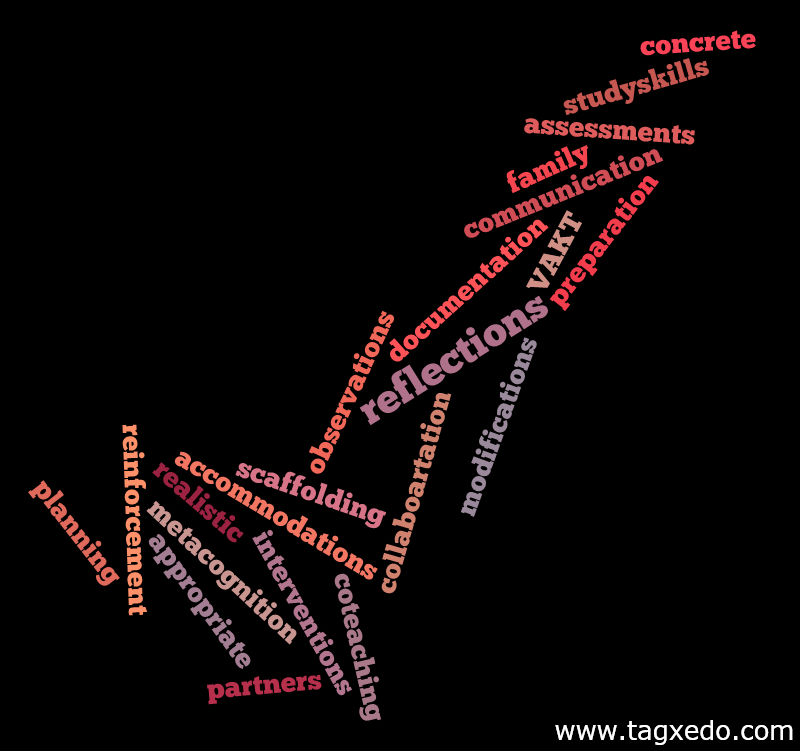
If you, your students, or your children enjoy this type of visual, check out this site and create your own!


Posted in Classroom Ideas | Tagged | Comments Off on Inclusion Check!

How is inclusion like yoga?

Breathe and be flexible!

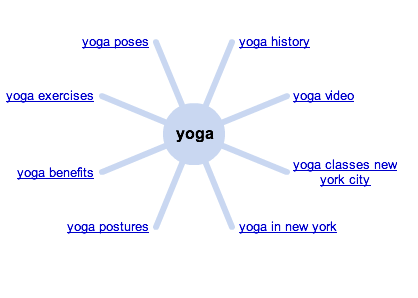
Inclusion, like yoga, connects both physical and cognitive elements. Yoga approaches value correct styles and poses, with people at various levels of proficiency based upon prior experiences, teachings, and mind-sets. Inclusion too has a variety of poses with effective co teaching models, collaborative practices, preparatory steps, and curriculum choices. Inclusion, like yoga connects physical elements with other disciplines. Yoga and inclusion require depth, breadth, and flexibility. Yoga has existed for 5,000+ years, hopefully inclusion will follow that same longevity path!

Check out the Wonder Wheel, a Google search tool, for both yoga and inclusion to see the multi-faceted connections for both yoga and inclusion.


Breathe and be flexible!

Now, pick your own topic and research more with a wonder wheel!


Posted in News | Tagged | Comments Off on How is inclusion like yoga?

Inclusion Connections

Inclusion classroom strategies that are consistently implemented from the early grades and onward yield excellent educational and lifelong dividends for students. Curriculum examples include increasing students’ metacognition before they forge ahead. Read on for some ideas that connect inclusion to the students:

Asking students to rate their understanding of a math lesson involving fractions; e.g., is the concept easy, medium, or too difficult?

Having students self-correct spelling errors by using an electronic dictionary

Allowing students to graph daily positive social interactions with peers

Requiring students to paraphrase biology lab instructions before they participate in the experiment

Describing a person they know who reminds them of a Shakespearean character from a play they recently read

Relating an historical time period to a current global issue

Telling how consumer literacy affects nutrition choices

The metacognitive possibilities and student connections are endless! The point, inclusion INCLUDES the linking of the curriculum to the students!


Check out Inclusion Activities That Work! and Inclusion Strategies and Interventions for additional student-curriculum connections!


Posted in Classroom Ideas | Tagged , | Comments Off on Inclusion Connections

Inclusion Definitions & Perspectives

An enthusiastic group of educators creatively and candidly offered the following responses to this open-ended statement:

Inclusion is________________

therefore, I am!

a work in progress.

sometimes challenging!

allowing students to find success at a level where they can feel safe to take risks.

giving each student a fair/equal chance to learn and succeed.

a learning process.

GE and SE teachers working together to meet the needs of all learners.

sometimes frustrating.

necessary to help students with special needs learn to be successful.

an exciting model for meeting the different needs of ALL learners.

teachers working collaboratively.

challenging, but worth it!

Your turn: Inclusion is____________.


Posted in News | Tagged , | Comments Off on Inclusion Definitions & Perspectives

Beyond Physical Inclusion

Successful inclusion classroom practices marry academic, social, emotional, behavioral and communication skills. Inclusion in the classroom goes way beyond physical inclusion, if students are truly included. Inclusion means that we treat all students as integral members and honor their entering levels with respectful instruction and interactions. Maya Angelou poignantly stated: “I’ve learned that people will forget what you said, people will forget what you did, but people will never forget how you made them feel.” It is the same within inclusion classrooms, since students will often remember how you treated them, long after they forget what you taught them!

Yes, the curriculum is important.

Yes, the standards are important.

Yes, the school policies are important.

And yes, physical inclusion is important, but not without the proper scaffolding to ensure academic, social, emotional, behavioral, and communication strides as well!

In response to Edutopia’s query on what a monument to teachers in Washington DC would look like, I thought that a heart-shaped brain would be an excellent choice!

Posted in Classroom Ideas | Tagged | Comments Off on Beyond Physical Inclusion